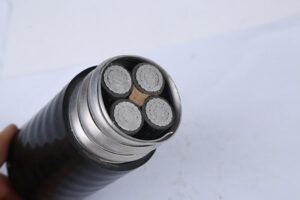
Understand The Difference Between Armor Cable And Non-Armor Cable


1. Different concepts

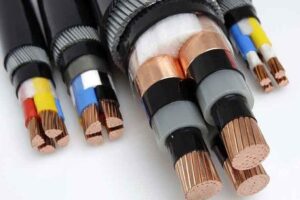
Armor cable: It is installed by different material conductors in a metal sleeve with insulating materials, and is processed into a bending solid combination.

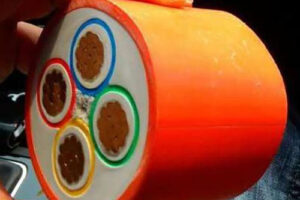
Non-armor cable: cables without armor protective layers, from several or several sets of wires in each group of at least two twisted cables, each set of wires insulated, often surrounds a center Twisted. The entire outer bread has a highly insulated coverage layer.
Read more

Ontwikkeling van omgewingsvriendelike minerale isolasiekabels


Abstrak: Stel die materiale en strukture van omgewingsvriendelike bekend minerale isolasie brandkabels, deur die ontwerp van isolerende lae vir mineraalbrandvoorkoming, termohardende polimeer beskermende lae, anorganiese vesel vuller, lae rook halogeenvrye silikon porselein isolasie laag, metaal pantser vuurvaste laag, brandvoorkomingslaag, en metaal pantser vuurvaste laag. Die saamgestelde vuurvaste struktuur is saamgestel uit lae-rook halogeen-vrye omgewingsbeskerming eksterne sorg laag, die realisering van die omgewingsbeskerming van kabelbrandweerstand en lae giftige omgewingsbeskermingsprestasie, lae toksisiteit, en brandbestande kabel.

Read more

Analysis of The Reasons for The Heat of The Pilot Line and The Method of Electrical Solution to The Heat of The Tension Resistance Pilot


Die transmission line connection point is a major weak point of inline operation. In the operation of often heat burned, thus causing power outages. The analysis of the wire connection point heating problem, and timely adoption of appropriate preventive measures, will effectively avoid the wire connection point overheating. This causes the wire connection point to burn off the accident. Analyze the causes of wire connection point heating, and understand the theoretical basis for the temperature rise of high-voltage lines. Terselfdertyd, mastering the prevention and solution measures to deal with the connection point heating problem, to ensure the safe and reliable operation of the line has practical significance.

Read more

What is The Correct Procedure for The Installation of Zinc Oxide Surge Arresters? And What are its Advantages?


What Is The Correct Procedure For Installing Zinc Oxide Surge Arresters?

Die zinc oxide arrester uses zinc oxide resistance as the main component, which greatly improves the voltammetric characteristics of the arrester and increases the through-current capability. When the arrester is in normal operation, the voltage flow through the arrester current is only microampere. When the overvoltage is received, the excellent non-linear characteristics of the arrester play a good role.

A lightning arrester is mainly used to protect electrical equipment from lightning intrusion overvoltage and operating overvoltage on its power equipment insulation damage.

Read more

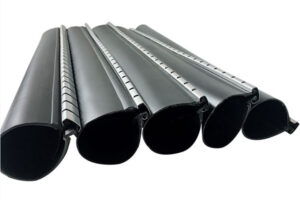
Introduction to Flame Retardant Heat Shrink Tubing


The main role of heat shrink tubing in a circuit is to protect important devices and circuits from damage and impact. Although it does not have any particular impact on the operation of the circuit, it is often the key point that determines the success or failure of the entire design. With the rapid development of the electronics industry, flame-retardant heat shrink tubing is also inseparable from the electronics industry, more and more electronic products need to use flame retardant heat shrink tubing for protection. The flame retardant processing of the heat shrink tube, when attacked by external fire sources, can effectively block, delay or stop the transmission of flame, to achieve the effect of flame retardant.

Read more

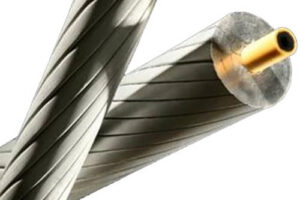
Aluminum Conductor Composite Core Cable (ACCC) Advantage Introduction


Op die oomblik, overhead cables are used to transport electricity over long distances. Conventional cables are mostly aluminum conductor steel reinforced (ACSR). Since the 1990s, carbon fiber composite cores (aluminum conductor composite core) have been used as the core bar of cables. ACCC has the following advantages over traditional conductors.

Read more


Teken in!